
 🔍 Expand
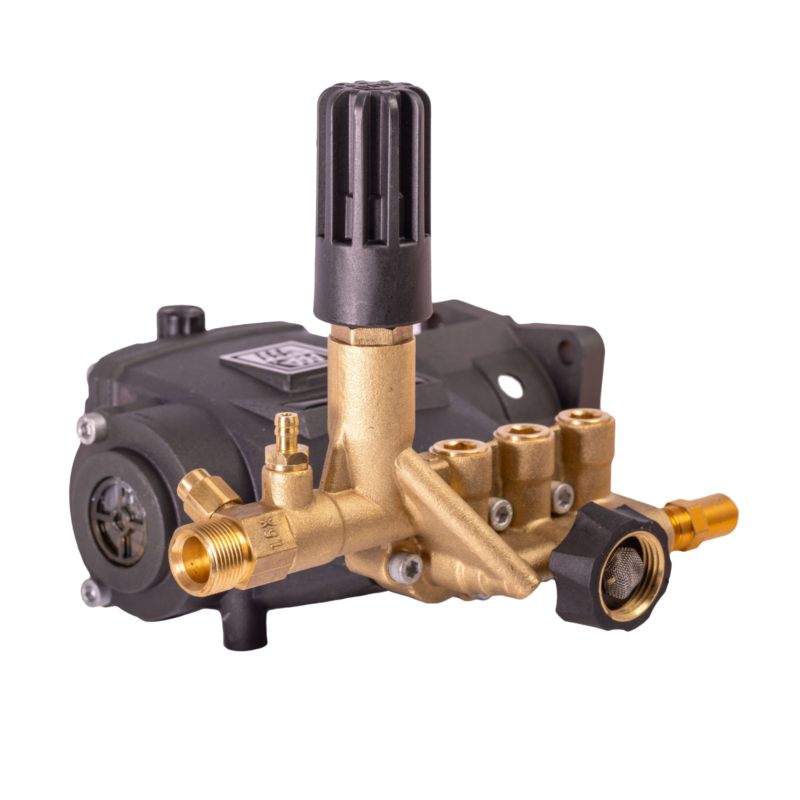
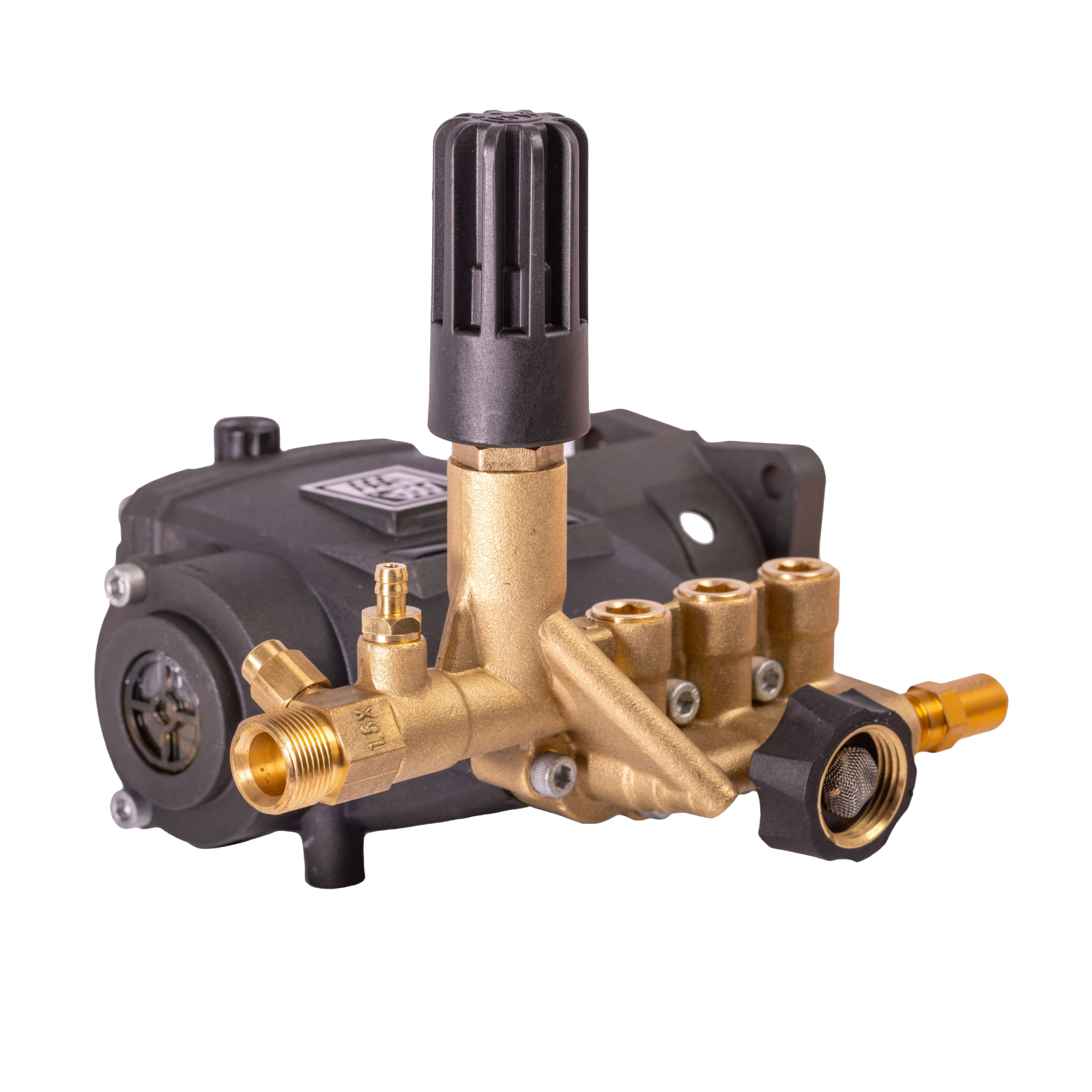
530009 AAA Horizontal Triplex Plunger 3/4″ Shaft Pump 3200 PSI 2.5 GPM





| Part Number | 530009 |
| Brand | OEM Technologies |
| Item Weight | 10 lbs |
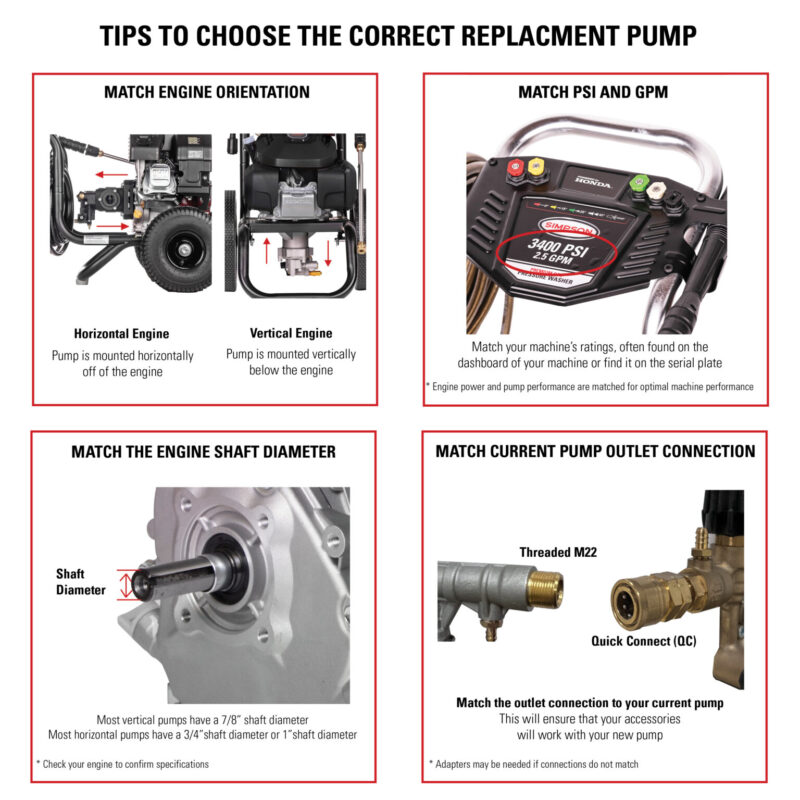
| Mounting Orientation | Horizontal |
| Part Type | Pressure Washer Pump |
| Max Pressure | 3200 |
| Flow Rate | 2.8 |
| Inlet Size | 3/4” Garden Hose |
| Outlet Size | M22 |
| Shaft Size | 3/4" |
| Bolt Pattern | SAE |
| Drive Key Size | 1" x 3/16" |
| Oil Capacity | 8.0 fl oz. |
The AAA 530009 is a C32 Series horizontal triplex plunger pump rated at 3,200 PSI and 2.8 GPM, designed as a direct-drive replacement for gas-powered pressure washers with a 3/4" horizontal shaft. Built with a forged brass manifold, polished ceramic-coated pistons, and a fully anodized die-cast aluminum crankcase, this pump is engineered for long-term durability and corrosion resistance.
- Patented PowerBoost Technology - Delivers higher pressure at the spray nozzle for more efficient cleaning performance without increasing engine load.
- Brass Pump Head with Ceramic-Coated Pistons - Resists corrosion and wear; dual oversized ball bearings reduce friction for extended pump life in demanding conditions.
- EZ-Start Adjustable Unloader with Oil Sight Glass - Fully adjustable pressure output via ergonomic control handle; sight glass eliminates the dipstick and makes oil level/contamination checks instant.
Part numbers 53BRD25, 53BRD28, 90036 are other numbers used for the same product as 530009. These are alternative part numbers used to identify this product.
| Alternate Part # | Equivalent To | Status |
|---|---|---|
| 53BRD25 | = 530009 | Same Product |
| 53BRD28 | = 530009 | Same Product |
| 90036 | = 530009 | Same Product |
This part is designed to work with the engine models listed above. Engine compatibility is based on shaft size, bolt pattern, and mounting orientation.
The pump has a rear sight glass for monitoring oil condition. At 3200 PSI, the seals surrounding the three ceramic plungers take significant stress. Running the pump dry, overheating, or storing it with water inside accelerates seal wear. Once the seals fail, pressurized water pushes past the plungers into the crankcase on every stroke, mixing with the oil and turning it milky—at which point the oil loses its ability to lubricate and bearing damage follows quickly.
During the first start up of the pressure washer, the oil may look frothy but should settle soon after the end of operation. If the milky and cloudy mix persists after an hour of settling there may be damage to the oil seals.
The pump uses ceramic-coated plungers instead of steel for better wear resistance at higher pressures. The tradeoff is that ceramic is brittle and sensitive to rapid temperature changes. Running the pump dry causes the plungers to overheat quickly, and when cold water hits them again, the thermal shock can crack or shatter the ceramic. A broken plunger loses its seal, causing a pressure drop on that cylinder every stroke—which shows up as rhythmic, violent pulsing in the hose.
Remove the manifold and inspect the pistons and ceramic plungers for damage or hairline fractures. Damage to the ceramic plungers can also be caused from winter freezing if the pump was not winterized for storage.
At 2.8 GPM, this demands more incoming water volume than most residential pressure washers. A weak well, low water pressure, or a long/kinked garden hose can't keep up with that demand, causing the pump to starve for water. This creates a pressure drop inside the pump that forms bubbles that collapse violently against the internal walls, producing a loud rattling sound and gradually eroding the brass manifold from the inside.
Test your water flow with a bucket test. Fill a 5-gallon bucket with your water source. It should fill the bucket within 90-100 seconds (roughly 3 - 3.3 GPM) this can safely handle the 2.8 GPM demand. Other solutions would be to ensure your water source line is 3/4" and 50ft or less.