Shaft mismatch is the number one reason operators buy the wrong replacement pressure washer pump. You find a pump with the exact PSI and GPM you need, the bolt holes look close enough, but when it arrives, it either refuses to slide onto the engine or spins freely without catching.
Engines from major manufacturers like Honda, Kohler, and CRX do not use a universal output shaft. A fraction of an inch difference will completely stall your repair. To ensure a replacement pump slides directly onto your engine without forcing it, you must verify three precise metrics: the shaft diameter, the exact shaft length, and the mounting bolt pattern. Here is your blueprint for getting those measurements right the first time.
The Three Common Shaft Diameters
Small gas engines used for pressure washers standardly fall into three shaft diameter categories. Knowing your engine’s displacement (cc) or horsepower (HP) is usually your first major clue, but physical verification is always required.
1. The ¾ in. Shaft (0.750”)
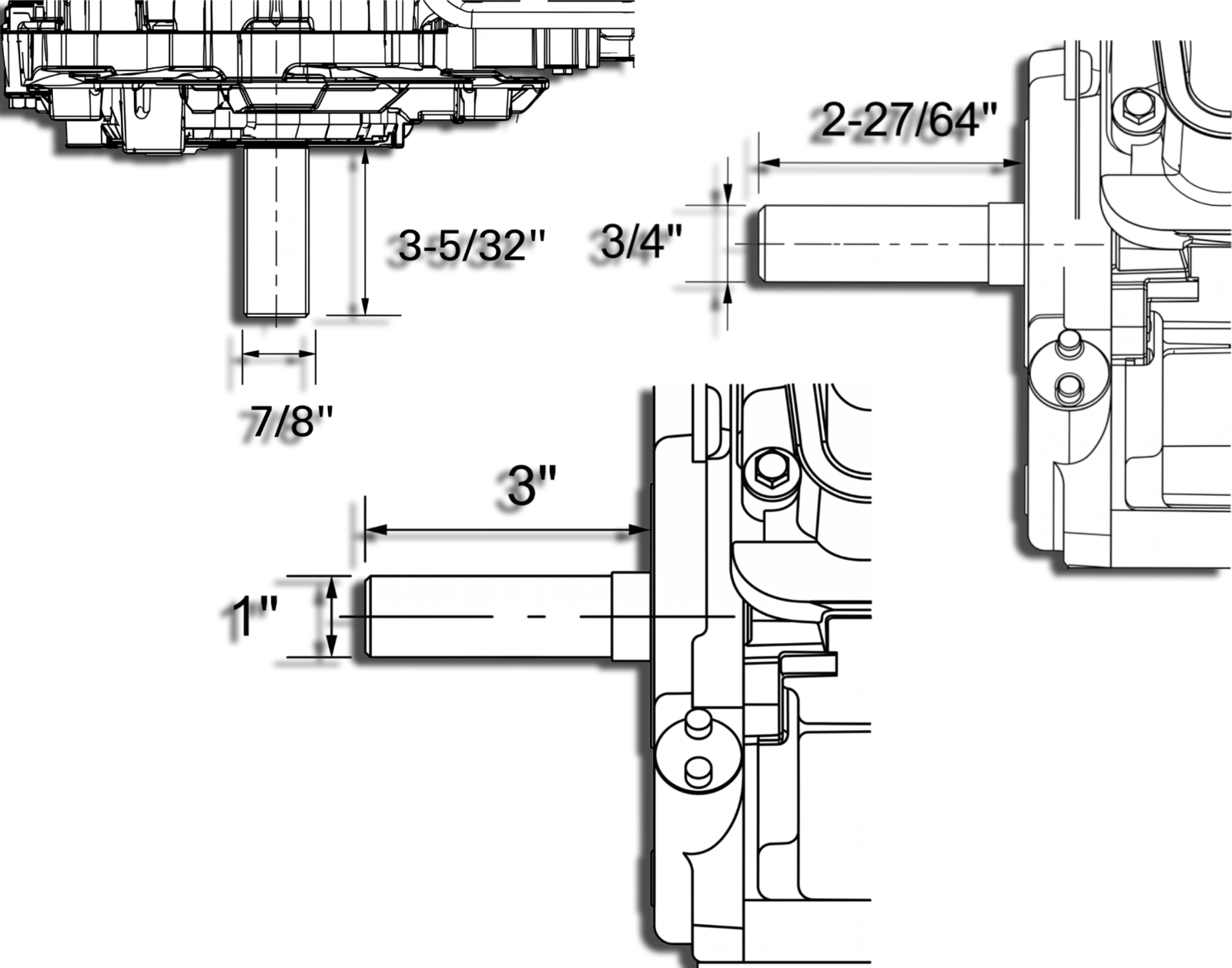
This is the standard for small, horizontal shaft residential engines, typically ranging from 160cc to 212cc (such as the Honda GX160 or GX200, and standard 6.5 HP clone engines). Pumps designed for these shafts are almost always axial or small triplex pumps built for light to medium duty work.
2. The 1 in. Shaft (1.000”)
This is the commercial standard. You will find 1 in. horizontal shafts on larger engines ranging from 270cc to 420cc (such as the Honda GX270, GX390, or Kohler CH440). These shafts support heavy duty commercial triplex pumps that push 3.5 to 5.0 GPM. The extra thickness is structurally necessary to handle the rotational torque generated by these larger pumps.
3. The ⅞ in. Shaft (0.875”)
This measurement is a major trap for buyers. The ⅞ in. diameter is used almost exclusively on vertical shaft engines—the pump sits directly underneath the engine casing, common on entry-level residential pressure washers. If you try to force a standard ¾ in. horizontal pump onto a ⅞ in. vertical shaft, it will not fit, and vice versa.
The Shaft Length Trap: Long Shafts vs. Short Shafts
One of the easiest mistakes to make when buying a replacement engine or piecing a pressure together is grabbing a general-purpose utility motor. Many industrial utility engines (used for concrete mixers, generators, or go-karts) are built with a **long-shaft** crankshaft extension. These long shafts often extend 3-1/2 inches or more out of the engine case.
Long utility shafts will not work with standard pressure washer pumps. Because a direct-drive pressure washer pump features a shallow, enclosed hollow input chamber, a long engine shaft will hit a hard stop inside the pump housing well before the pump flange can flush mount to the engine face.
True pressure washer spec engines use highly specialized **short style shafts**. These short shafts are specifically machined to fully submerge into the pump housing, allowing the pump flange to bolt flush and tight against the engine crankcase face for a perfectly balanced, vibration-free connection.
How to Take Exact Measurements
Estimating these measurements with a standard construction tape measure is not recommended. The differences are too small to eyeball. Use a pair of digital or dial calipers for accuracy.
Measuring Shaft Diameter:
Open the calipers and measure the thickest part of the smooth exterior metal of the crankshaft extension coming out of the engine block. A ¾ in. shaft will read exactly 0.750 in, a ⅞ in. shaft will read 0.875 in, and a 1 in. shaft will read 1.000 in.
Measuring Shaft Length:
Place the base of your calipers flat against the engine crankcase mounting face (or the step where the shaft begins) and extend the depth rod out to the absolute tip of the shaft. Pressure washer spec horizontal ¾ in. engines generally feature a short style shaft length between 2-1/4 in and 2-1/2 in. Commercial 1 in. shafts, like those on a Honda GX390, require a slightly longer but still dedicated short-style extension, typically measuring between 2-3/4 in. and 3 in. to fully accommodate large direct-drive triplex pumps.
The Keyway Slot:
Look at the square groove cut along the length of the shaft. This is the keyway. A square piece of metal (the key) sits in this slot to lock the engine shaft and the pump mechanism together so they turn as a single unit. ¾ in. shafts typically use a ³⁄₁₆ in. square key, while 1 in. shafts upgrade to a ¼ in. square key. Ensure your replacement pump includes this key, or that you retain your old one during teardown.
Verifying the Engine Bolt Pattern
Even if the shaft dimensions match perfectly, the pump housing must bolt securely to the engine face to prevent dangerous wobbling or structural failure. The mounting flanges follow standardized patterns based on engine size.
| Shaft Size (Diameter & Length) | Common Engine Range | Typical Bolt Pattern (Center-to-Center) | Common Pump Configuration |
|---|---|---|---|
| 3/4″ Dia. • 2-1/4″ to 2-1/2″ Short Length | 160cc to 212cc (5.5 to 7 HP) | 3-5/8 inches apart (square pattern) | Axial or Medium Triplex |
| 1″ Dia. • 2-3/4″ to 3″ Short Length | 270cc to 420cc (9 to 15 HP) | 5 inches apart (diagonal/cross pattern) | Heavy-Duty Commercial Triplex |
| 7/8″ Dia. • Variable Length | 140cc to 190cc (Residential) | 3-bolt triangular or 4-bolt standard ring | Vertical Consumer Axial |
When measuring your engine’s bolt circle diameter, measure from the absolute center of one bolt hole diagonally across the shaft to the center of the opposite bolt hole. For a standard 1 in. commercial engine like a Honda GX390, this diagonal measurement is almost universally 4-3/4 in. to 5 in.
Pro Tip: When installing a new pump, never force it onto the shaft with a hammer if it feels tight. Clean the engine shaft thoroughly with fine sand paper to remove rust, burrs, or old debris. Apply an even coat of anti-seize lubricant along the shaft and keyway before sliding the pump on. This prevents the two metals from cold-welding together over time, making future maintenance vastly easier.
Final Thoughts
Before hitting the buy button on a replacement pump or engine, spend two minutes with a pair of calipers. Confirming whether your Honda, Kohler, or CRX engine has a ¾ in., ⅞ in., or 1-inch shaft checking that the crankshaft length aligns with the depth of the pump housing, and verifying the bolt pattern configuration guarantees a smooth installation. Matching the physical footprint of your engine to the pump intake is the absolute baseline of successful equipment maintenance.